26%
Cat-Owning Households (UK)
Source: PFMA Pet Population Report 2024 (approx. 11.1 million pet cats in the UK)
Individual enclosures, cat-specific vaccination tracking, multi-cat family bookings, feeding logs, and daily photo updates. Not adapted from dog boarding software — built from the ground up for cat care.
No credit card required · Set up in under 2 days
Key data on the UK cattery sector, cat ownership trends, and digital adoption
Source: PFMA Pet Population Report 2024 (approx. 11.1 million pet cats in the UK)
Source: CFSG Pet Industry Census 2024 (licensed cat boarding facilities, estimated)
Source: UK Pet Boarding Digital Adoption Survey 2024
Self-reported by cattery operators after switching from paper and phone systems
Bookings involving more than one cat from the same household (industry estimate)
School holiday periods when most UK catteries reach full capacity
Cattery owners frequently find themselves in a frustrating position: the booking and management tools that exist in the market were mostly built for dog boarding or generic appointment scheduling, and they don't fit the way catteries actually operate. The result is either a system that half-works and requires workarounds, or a return to paper systems that are reliable but time-consuming.
The differences between cat boarding and dog boarding are operational, not just cosmetic. Cats cannot typically be housed in groups with unfamiliar cats — each requires their own enclosure. Booking "12 cat spaces for Christmas week" isn't meaningful information if you don't know which of your 12 enclosures each cat is assigned to, because some are larger, some have outdoor runs, and some cats from the same family need to be placed adjacent to each other. A generic booking system that counts total capacity will let you overbook specific enclosure types even when the total number is correct.
The vaccination requirements are different too. Dog boarding platforms often track Bordetella and DHPP as defaults. For catteries, the relevant vaccines are FVRCP (which covers feline herpesvirus, calicivirus, and panleukopenia) and FeLV (feline leukaemia), with FIV test documentation required at some facilities. A platform that has "vaccination tracking" for dogs may not know what to do with a cat's immunisation record.
The Multi-Cat Family Problem
An estimated 30–40% of cattery bookings involve two or more cats from the same household. Each cat has its own vaccination status, its own dietary requirements, and its own care needs. Managing a booking for three cats from the same owner — checking three sets of vaccine records, maintaining three separate feeding logs, sending one invoice that covers all three at the right prices — takes three times the effort of a single-cat booking on a system that isn't built for it. Purpose-built cattery software handles the whole family as a linked unit.
There's also the communication challenge. Cat owners are often more anxious than dog owners about boarding because cats are less obviously happy in unfamiliar environments. A dog will usually eat, socialise, and generally appear to be fine within a day. A cat may take 48 hours to come out from under their bedding and eat properly, which is entirely normal — but an owner who hasn't heard from you will assume the worst. A daily photo update with a care note takes your team two minutes and prevents ten minutes of reassurance calls.
Before: Generic software + paper
Cat vaccine tracking bolted on, multi-cat families managed manually, no photo updates, anxious owner calls all day
After: MyPetCare cattery mode
FVRCP/FeLV tracking built in, family bookings handled as a unit, daily updates automated, owner calls near zero
Cattery software is a management platform built for the specific operational requirements of licensed cat boarding. It manages individual enclosures rather than general capacity, tracks cat-specific vaccination protocols, handles multi-cat family bookings with linked profiles, maintains feeding and litter care logs, and enables daily communication with owners in a way that reduces anxiety without creating phone call volume.
For cattery operators, the difference between purpose-built software and a generic booking system is felt every day. When an owner calls to book their two cats for a fortnight in August, a purpose-built system handles linked cat profiles, checks both sets of vaccination records, allocates adjacent enclosures, applies sibling pricing, and generates one invoice. A generic system requires you to handle those details manually in the booking notes.
MyPetCare operates the same platform for catteries, boarding kennels, and dog daycare — so if you run a mixed facility, all services are managed from one system with unified customer records and reporting. A family with two cats and a dog doesn't need separate accounts for each service.
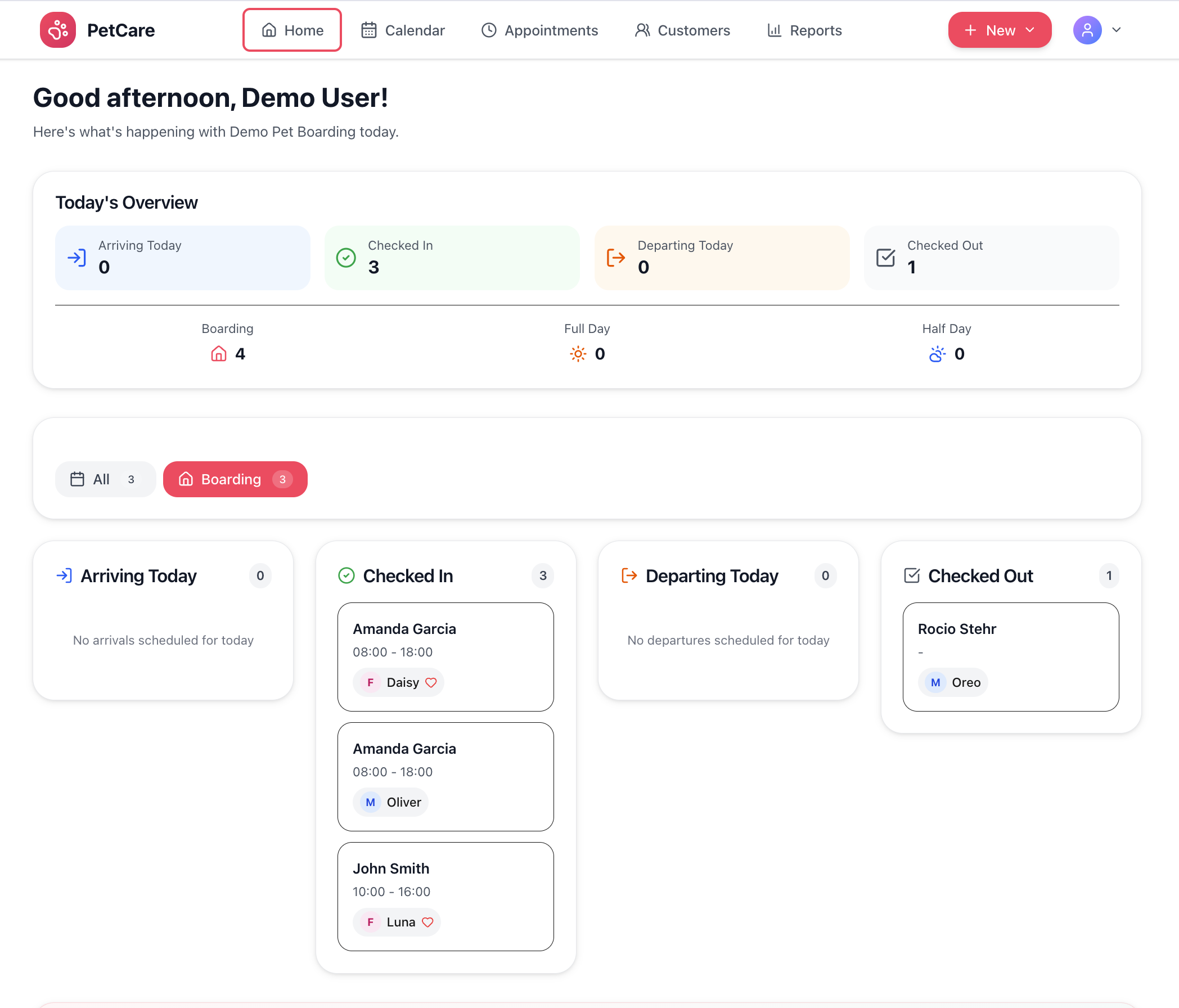
These are the features that make the biggest operational difference for catteries specifically — not just boarding facilities in general.
Each enclosure, chalet, or pod in your cattery is configured as a named unit in the system with its own capacity, size designation, and features — outdoor run access, elevated sleeping platform, ground-floor position for elderly or mobility-limited cats. The enclosure grid shows the status of every unit in real time: occupied, check-in today, check-out today, cleaning required, or blocked for maintenance.
When a booking is confirmed, enclosures are assigned either manually or via auto-assignment based on the cat's size and any special requirements noted by the owner. Multi-cat families from the same household can be allocated to adjacent enclosures automatically, so siblings that are used to cohabiting aren't placed at opposite ends of the facility.
Blocking enclosures for deep cleaning, redecoration, or maintenance is a single action that prevents bookings during that period without requiring any additional management. Related: Cattery Software: The Complete Guide for UK Facilities.
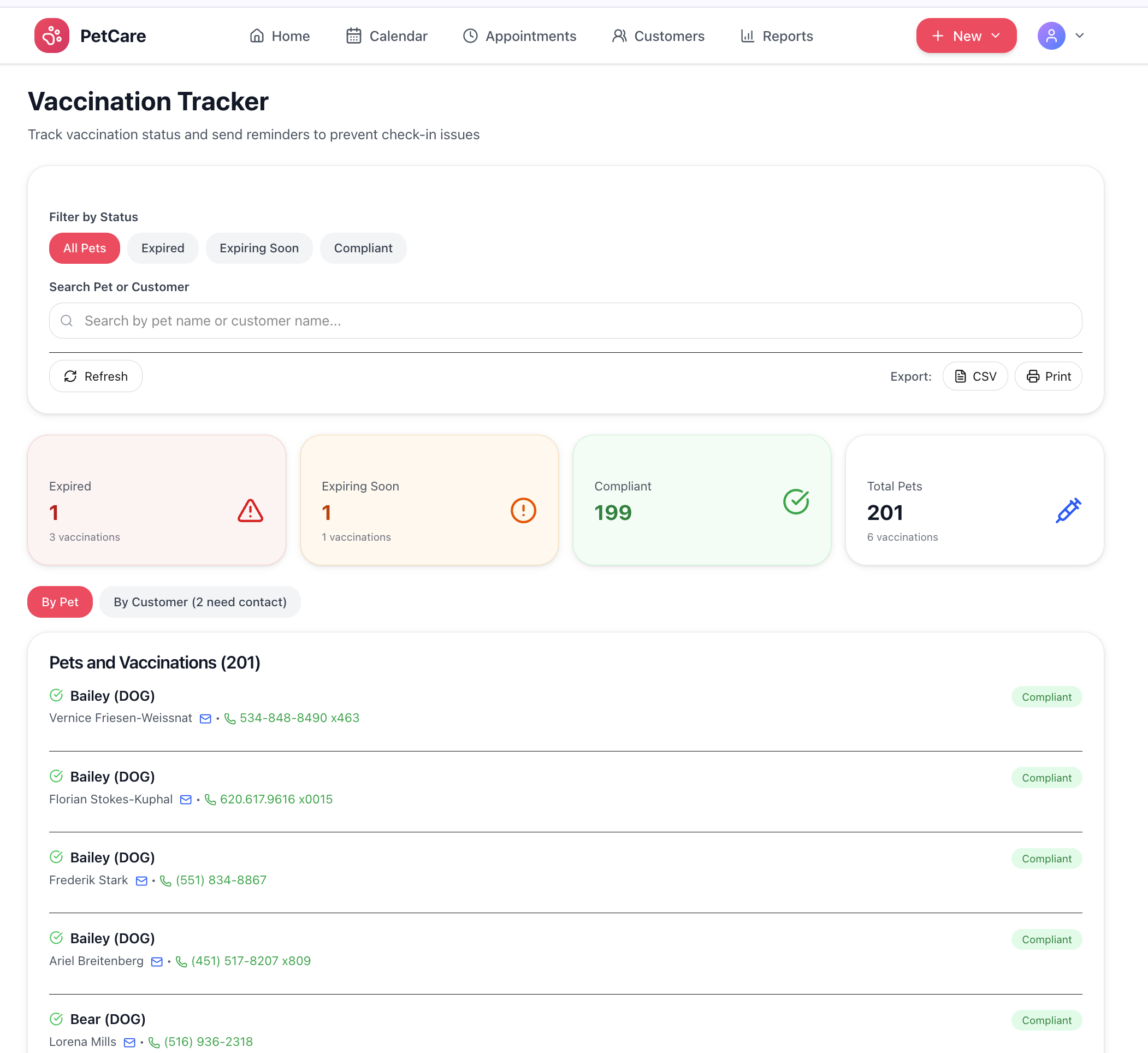
Cat vaccination requirements are different from dogs, and most dog-oriented boarding software handles them poorly. MyPetCare's vaccination tracker is configured for the certificates UK catteries actually require: FVRCP (covering herpesvirus, calicivirus, and panleukopenia — the core "cat flu" combination), FeLV (feline leukaemia), and documentation of FIV test results where your cattery policy requires them.
Certificates are stored against each cat's profile with the exact expiry date from the vet-issued documentation. Owners receive automatic reminder emails 30 and 60 days before their cat's vaccines are due for renewal, giving them time to book the vet before the certificate lapses. If a certificate expires without an updated version being uploaded, the system flags the cat's upcoming bookings and can block new reservations until the record is current.
For local authority inspection purposes, the vaccination database covers all cats currently boarded and all cats boarded over the past year, retrievable as a single compliance report rather than a physical folder that has to be manually checked.
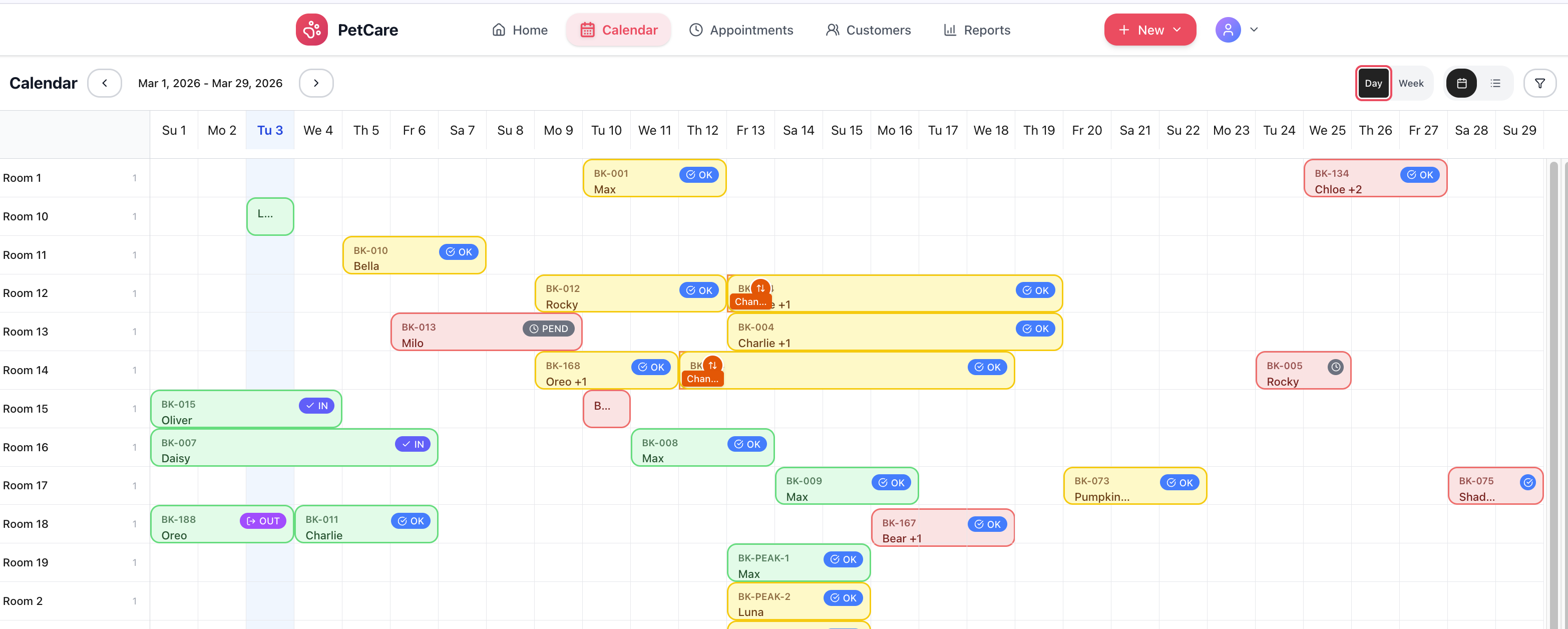
Each cat's profile holds detailed feeding instructions: preferred brand, dry or wet food, portion sizes, meal frequency, any allergies or intolerances, and any special dietary requirements. These generate a daily task list for staff showing every feeding task in time order, which staff mark as completed from their phone. Litter box checks can be added as a recurring care task on the same schedule — important both as welfare monitoring and as a care record.
Any concern noted during care — a cat not eating on day one, an unusually small litter box output, a cat hiding rather than engaging with staff — is logged as a note visible to all staff and flagged on the cat's profile until resolved. This ensures the issue is tracked across shifts rather than mentioned verbally to one person and forgotten.
For cats on medication, the medication module tracks dosage, timing, method of administration, and staff sign-off for each dose. This is particularly important for elderly cats or cats with chronic conditions who require daily medication during their stay — the log provides a complete record of every dose administered that owners and vets can refer to if needed.
Cat owners — particularly those boarding for the first time or leaving for an extended holiday — tend to be anxious about their cat's welfare in a way that generates frequent check-in calls. The calls are understandable: cats are private animals who mask stress, and an owner can't tell from a brief phone call whether their cat is genuinely fine or whether the person answering is simply reassuring them.
A daily photo with a brief welfare note is significantly more reassuring than a phone call, because owners can see the cat for themselves. Staff capture a photo from their phone each afternoon and add a one-sentence note — "Settled in well today, ate all of her supper and was curious about the outdoor run" — which sends as a branded email or appears in the owner portal. Two minutes of staff time replaces multiple anxious calls throughout the day.
For cats that take longer to acclimatise, the notes also let you proactively communicate what's normal — "She's been a little quiet for the first day which is very common for cats — we're giving her space to settle at her own pace" — rather than having the owner find out by calling and inferring from a brief response that something might be wrong.
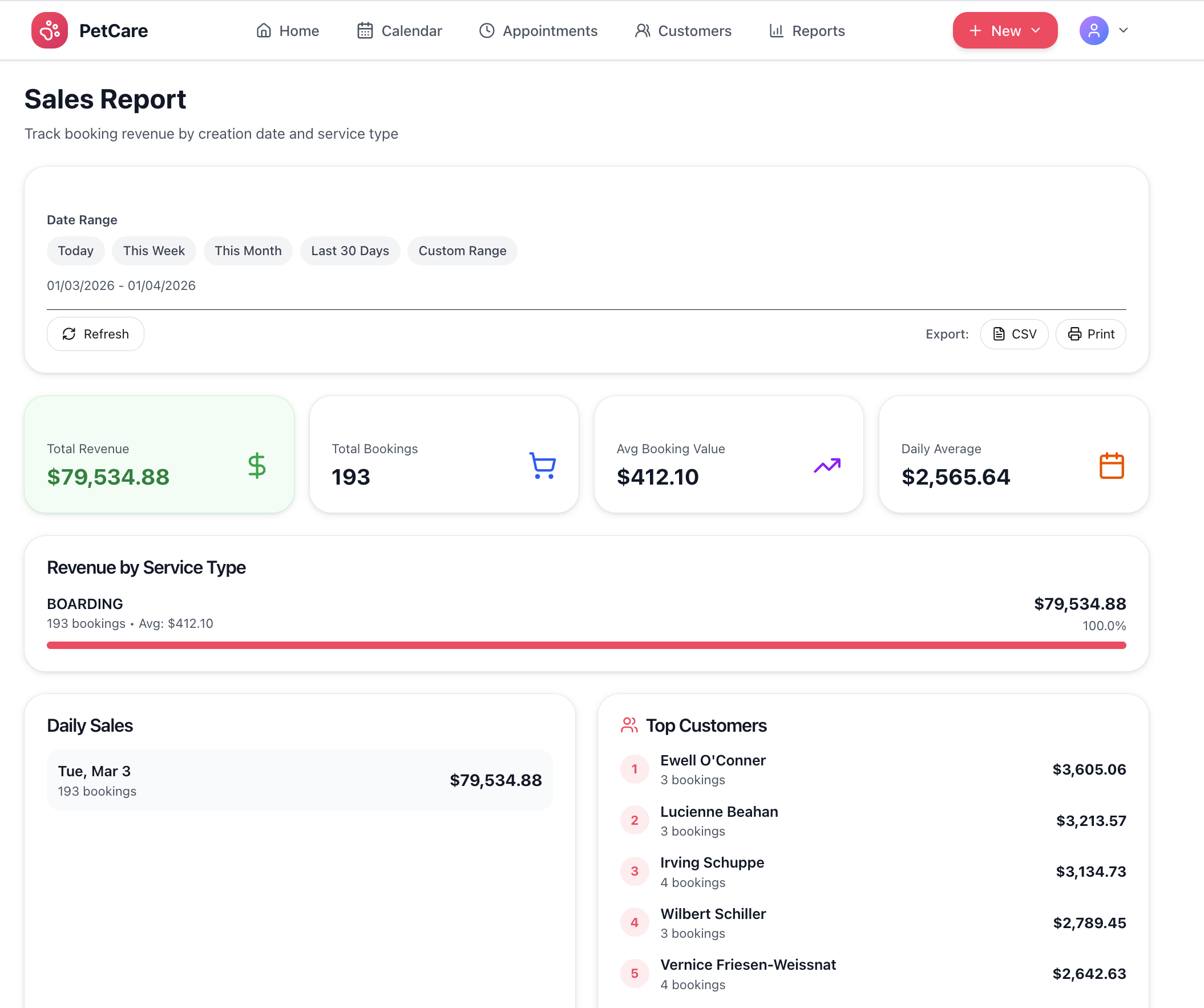
Between 30–40% of cattery bookings involve multiple cats from the same household. These bookings are more administratively intensive than single-cat bookings: each cat needs its own vaccination records checked, may have different dietary requirements, and owners typically want sibling cats placed in adjacent enclosures or grouped together if the facility permits. On a paper system, a booking for three cats is essentially three separate bookings that happen to share owner contact details.
MyPetCare handles multi-cat families as a linked unit throughout the booking and care process:
Use our free Revenue Calculator to model your cattery income by season, test pricing scenarios for multi-cat families, and see how much admin time you could recover with a digital system.
Try the CalculatorMyPetCare vs generic booking tools vs paper and spreadsheet management
| Feature | MyPetCare | Generic Tools | Manual/Spreadsheets |
|---|---|---|---|
| Online Booking 24/7 | ✓ | ✓ | ✗ |
| Individual Enclosure Management | ✓ | ✗ | ✗ |
| Cat-Specific Vaccine Tracking (FVRCP, FeLV) | ✓ | ✗ | ✗ |
| Multi-Cat Family with Sibling Pricing | ✓ | ✗ | ✗ |
| Digital Feeding & Litter Logs | ✓ | ✗ | ✗ |
| Photo Updates to Owners | ✓ | ✗ | ✗ |
| Medication Administration Records | ✓ | ✗ | ✗ |
| Owner Portal (Bookings, Records, Updates) | ✓ | ✗ | ✗ |
| Automated Deposit Collection | ✓ | ✓ | ✗ |
| Monthly Cost | From £40 | From £80 | Manual/Free |
Most pet boarding software was built for dog facilities and adapted for cats as an afterthought. MyPetCare's cattery features were built from the start around how cat boarding works: individual enclosures, cat-specific vaccinations, multi-cat family management, and the particular communication needs of cat owners.
We're currently in early access with a small group of UK cattery and boarding operators. Early access members get full platform access at a founding-member rate and direct input into what gets built next.
Cat-First Design
FVRCP and FeLV tracking built in. Enclosure-level management rather than total capacity counts. Multi-cat family workflows that don't require workarounds.
AAL Inspection Ready
UK Animal Activity Licensing compliance records: vaccination database, care logs, emergency contacts — all exportable for your annual inspection.
Founding Member Rate
Early access pricing locked for the lifetime of your account. As the platform grows, your rate stays the same.
petcare.software is trusted by pet businesses across the UK. Start your free trial today and see why operators are making the switch.
Start Free TrialCattery software is a management platform built specifically for cat boarding facilities. It handles online bookings, individual enclosure assignments, cat-specific vaccination tracking (FVRCP, FeLV/FIV), feeding and litter logs, medication administration records, multi-cat family management, and daily photo updates to owners. Purpose-built systems save catteries 10–14 hours per week compared to paper systems, and remove the administrative barriers that make multi-cat and long-stay bookings disproportionately time-consuming.
Yes, in meaningful ways. Cats require individual enclosures (they do not naturally coexist with strange cats the way dogs tolerate group spaces), and their vaccination protocols differ from dogs — cats need FVRCP and often FeLV/FIV testing rather than Bordetella and DHPP. Cattery operations also have different monitoring rhythms: litter box checks are a care task dogs don't require, and cat appetite and litter box habits are the primary health indicators staff monitor during a stay. MyPetCare's cattery mode handles these species-specific differences while running alongside dog boarding if you operate both.
Multi-cat family bookings are more complex to manage manually than single-cat bookings: each cat may have different vaccination status, different dietary needs, and owners want them booked together or in adjacent enclosures. MyPetCare handles this with linked pet profiles under one owner account, group booking flows that place cats in the same or adjacent enclosures, automatic sibling pricing (e.g., 2nd cat 15% off), coordinated care schedules visible to staff as a grouped task, and a single invoice covering all cats in the family.
The vaccination tracker handles the full range of cat-specific vaccines used by UK catteries: FVRCP (Feline Viral Rhinotracheitis, Calicivirus, Panleukopenia — the core "cat flu" vaccine), FeLV (Feline Leukaemia Virus), and documentation of FIV (Feline Immunodeficiency Virus) testing where required. Automatic reminders go out to owners 30 and 60 days before certificates expire, and the system can block new bookings for cats with lapsed vaccination records until updated certificates are uploaded.
Cattery management software typically costs £40–150 per month. MyPetCare offers flat monthly pricing from £40 with no per-booking transaction fees and all features included. For early access customers, founding-member rates are available. Avoid platforms that charge 3–5% per booking — at typical cattery volumes, particularly during peak holiday periods, this represents a significant recurring cost.
Yes. Staff send daily photo updates from their phone with a brief welfare note — whether the cat ate well, used the litter box normally, is settling in, or has any flagged behavioural changes. These go to owners as branded email updates or appear in the owner portal. For cats on longer stays, particularly those whose owners are abroad, this daily contact significantly reduces anxious calls to the cattery and gives owners confidence without requiring them to interrupt your day.
Feeding instructions are stored on each cat's profile: preferred food, portion size, meal frequency, and any dietary restrictions or medical diet requirements. Staff see a daily care schedule showing each cat's feeding tasks in time order and mark completions from their phone. Litter box checks can be added as a separate recurring task on the same schedule. Any concerns — a cat refusing food, unusual elimination habits — are logged as notes visible to all staff and to the owner. These logs also serve as a welfare record relevant to local authority inspections.
Each enclosure or chalet in your cattery is set up in the system with a name, size category, and any special features (outdoor run access, elevated sleeping area, ground-floor accessible). The enclosure grid shows each unit's current status — occupied, vacant, cleaning required, maintenance block — at a glance. When a booking is confirmed, you assign the appropriate enclosure manually or via auto-assignment based on cat size and family grouping preferences. Sibling cats from the same household can be placed in shared enclosures or adjacent units according to the owner's preference.
Yes. UK catteries operating under Animal Activity Licensing (AAL) regulations require annual licence renewal and are subject to inspection. Inspectors assess record-keeping including vaccination compliance, care logs, emergency contacts, and general welfare documentation. MyPetCare's digital records — vaccination database with certificate uploads, timestamped feeding and care logs, owner and emergency contact information for each boarder — produce the kind of retrievable, complete record set that supports a positive inspection outcome.
First-time boarding cats often eat less and are quieter for the first 24–48 hours while acclimatising to new surroundings. The staff notes feature lets your team log these observations in the cat's record, which helps owners understand what's normal behaviour and what would warrant a vet call. A photo of a cat settling into their enclosure on day one, sent as a daily update, is more reassuring to a first-time cattery owner than a phone call saying everything is fine. The communication tools in MyPetCare make this kind of proactive owner management straightforward.
Individual enclosures, cat vaccinations, multi-cat families, and photo updates — all managed from one platform.
No credit card required · Cancel any time · Set up in under 2 days
Written by the MyPetCare Team
This guide was written by the MyPetCare founding team with direct experience in pet boarding and daycare operations. The cattery-specific features described here were developed in collaboration with UK cattery operators as part of our early access programme. We understand the specific operational differences between cat and dog boarding — and why most generic software doesn't handle catteries well.
Last updated: March 2026
Run assignments, compliance records, and staff task management for boarding kennels
Multi-night stays, feeding logs, and deposit management for dog boarding
In-depth guidance on choosing the right cattery management software
Honest ROI analysis for small cattery owners — costs, benefits, and when to invest
Licensing, facility design, pricing, and operations guide for new cattery owners
We use cookies to improve your experience and analyze site traffic. Learn more