Dog Playgroup Management: Safety, Staffing and Software Guide

Playgroup management is one of the most operationally demanding parts of running a professional dog daycare. Get it right and dogs leave tired, happy, and injury-free — and owners become loyal, long-term clients. Get it wrong and you face injuries, complaints, and real liability exposure. This guide covers the practical side: how to group dogs safely, how to staff and supervise effectively, how to document incidents properly, and how purpose-built dog daycare software can take the administrative burden off your team so they can focus on the dogs in front of them.
Why Playgroup Management Matters
The stakes in a professional daycare are higher than most operators initially appreciate.
Liability. When a dog is injured in your care, you are responsible. Mismatched groupings — a boisterous 30kg dog placed with a timid 5kg dog, or an unvaccinated dog admitted into a group — are exactly the kind of preventable errors that end up in complaints, refund demands, and occasionally legal disputes. Documented protocols protect your business.
Dog safety and welfare. Stress is a real harm, even without physical injury. A dog placed in a group that overwhelms it will not benefit from daycare and will often show deteriorating behaviour over time. Physical injuries from size or temperament mismatches range from minor abrasions to serious wounds.
Client trust. Owners are entrusting you with a family member. The facilities that attract and retain clients long-term are the ones where parents can see that groupings are deliberate, incidents are recorded and communicated honestly, and their dog’s individual needs are taken seriously.
Staff safety. Handlers intervening in dog conflicts are frequently injured. Well-managed groups — with appropriate supervision ratios, clear escalation protocols, and trained staff — protect your team as well as the dogs.
Grouping Dogs Correctly
The single most impactful thing you can do for playgroup safety is to get groupings right from the start. Four criteria matter:
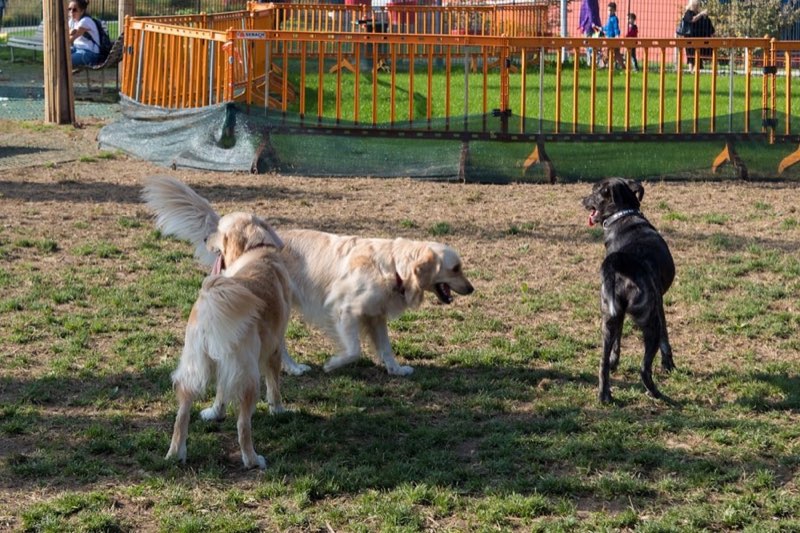
Size. Maintain at least three size tiers: small (under 10 kg), medium (10–25 kg), and large (25 kg+). Even gentle, well-socialised dogs from different size tiers create injury risk — a large dog playing exuberantly can accidentally cause serious harm to a small dog without any aggressive intent. Size tiers are non-negotiable; individual temperament does not override them.
Temperament and play style. Within a size tier, match dogs by how they actually play. Wrestling dogs, chase dogs, and sniff-exploration dogs have different social needs. A high-energy wrestler paired with a sensitive, low-energy dog creates stress and conflict even when both dogs are friendly. Assess play style during the initial trial session and document it so staff make consistent grouping decisions.
Vaccination status. All dogs must be current on required vaccinations before they join any playgroup — no exceptions. Vaccination management requires active tracking: knowing not just that a dog was vaccinated, but when those vaccinations expire and flagging them before they lapse. A dog that attended fine last month may have lapsed vaccinations this month.
Age. Puppies benefit from dedicated puppy groups where normal social clumsiness is tolerated and introductions are managed carefully. Adult dogs in the main groups should not have to manage an over-excited puppy repeatedly pestering them. Senior dogs typically prefer smaller, calmer groups with shorter, less intensive play sessions.
Staff-to-Dog Ratios and Supervision Standards
The industry standard for supervised active play is one trained handler per 10–15 dogs. That ratio should be adjusted downward in several situations:
- Mixed-size groups where intervention risk is higher
- Water play or off-site activities (1:6 or better)
- High-energy periods such as morning arrival rushes
- Groups containing dogs with known reactivity or special needs
Critically, ratios count only staff who are actively supervising the dogs in that space — eyes on the group at all times. Front desk staff, cleaning staff, and anyone performing administrative tasks do not count toward the supervision ratio. If your only handler steps away to answer the phone or update a record, supervision has effectively stopped.
Supervision also has a specific definition: it means watching the dogs, reading body language, intervening early, and redirecting behaviour before it escalates. Staff who are looking at screens, chatting with each other, or attending to paperwork while nominally “in the room” are not supervising.
Staff training requirements for playgroup supervisors should include: canine body language recognition (stress signals, arousal escalation, play vs. conflict), safe intervention techniques, de-escalation methods, and emergency protocols.
Incident Reporting: What to Record and Why
No matter how well a facility is managed, incidents happen. What separates professional operations from amateur ones is how incidents are documented and communicated.
Log every incident — including near-misses — immediately. A written record created at the time of the event is far more credible than a memory reconstructed later. Record:
- Date, time, and location within the facility
- Dogs involved (names, breeds, owners with contact details)
- A factual, objective description of what happened
- Any injuries sustained and treatment provided (on-site first aid, vet referral)
- Owner notification: time, method, and the owner’s response
- Follow-up actions and outcome
Why this matters beyond the immediate incident:
Legal protection is the obvious one — if an owner disputes what happened, a contemporaneous record is your strongest defence. Insurance claims depend on documented evidence. But there is a less obvious benefit: pattern identification. If you review your incident log and find the same two dogs appear repeatedly in conflicts, that tells you a grouping change is overdue. If incidents cluster around a particular handler’s shift, that flags a training or supervision issue. Paper logs buried in a folder cannot be searched; digital records can.
Owners should always be notified of incidents the same day, regardless of severity. Transparency — even when it means delivering uncomfortable news — is what builds long-term trust.
Using Software to Manage Playgroups
At small scale, manual tracking of groupings, vaccinations, and attendance is manageable. At 20–30+ dogs per day, it becomes error-prone and time-consuming. Dedicated dog daycare software handles these tasks from a single dashboard:
Check-in and check-out tracking. Know in real time which dogs are on-site, which playgroup they are assigned to, and since what time. Eliminates manual headcounts and reduces the risk of a dog being placed in the wrong group during a busy morning check-in rush.
Attendance records. A historical log of which dogs have attended on which days and in which groups is invaluable when investigating a conflict or planning a new dog’s introduction. Instead of relying on staff memory (“I think those two have been together before”), you have a searchable record.
Automated report cards. Daily photo and notes sent to owners at the end of each session demonstrate active supervision and give owners visibility into their dog’s day. This builds trust and reduces the volume of “how did my dog do today?” enquiries, freeing up staff time.
Vaccination management. Software flags expired or missing vaccinations at check-in, so an unvaccinated dog cannot accidentally join a group. Manual tracking relies on someone remembering to check a spreadsheet; software-enforced checks happen automatically at every check-in.
Common Playgroup Problems and How to Prevent Them
Even well-run facilities encounter recurring issues. The key is addressing each with a systematic prevention step rather than treating every incident as one-off.
| Problem | Prevention |
|---|---|
| Bullying / persistent targeting | Intervene early, adjust groupings before conflicts escalate, schedule rest breaks |
| Over-arousal / frantic behaviour | Mandatory downtime periods mid-session, reduce group sizes during high-energy periods |
| Resource guarding | No food or toys in shared play spaces; monitor any high-value items introduced by owners |
| Size mismatch injuries | Enforce size tiers strictly; no exceptions for “gentle” large dogs or “confident” small dogs |
| Vaccination gaps at intake | Software-enforced check at every check-in; staff cannot override without manager approval |
| New dog integration failures | Proper introduction protocol: neutral space one-on-one → small familiar group → main group |
The table above reflects the most common incidents logged across professional daycare operations. Most are preventable with consistent protocols — the facilities that run into repeated problems are usually the ones applying rules selectively rather than consistently.